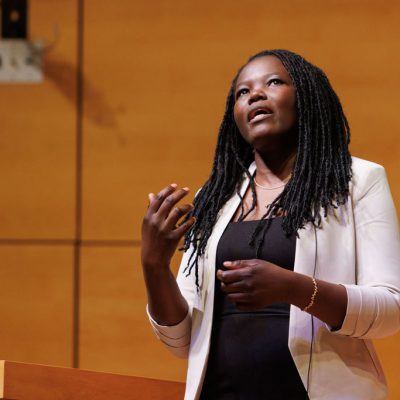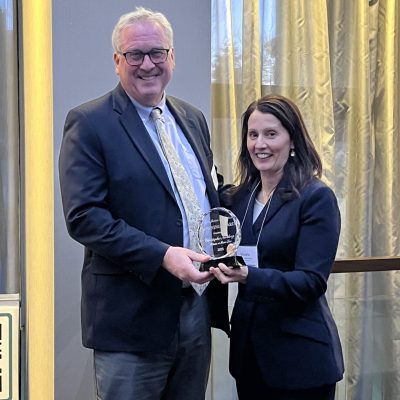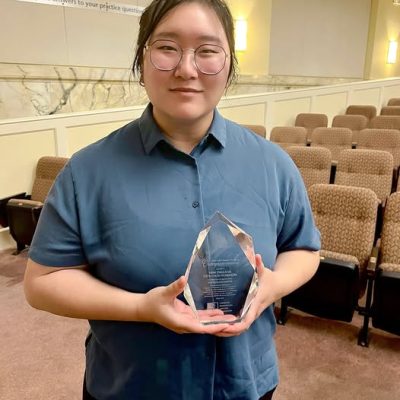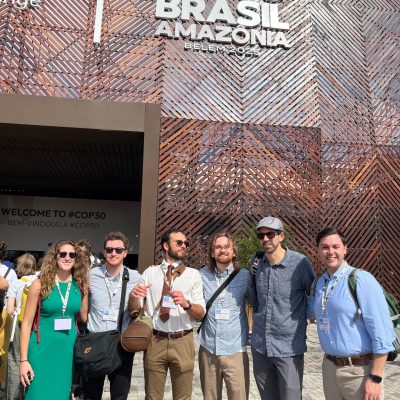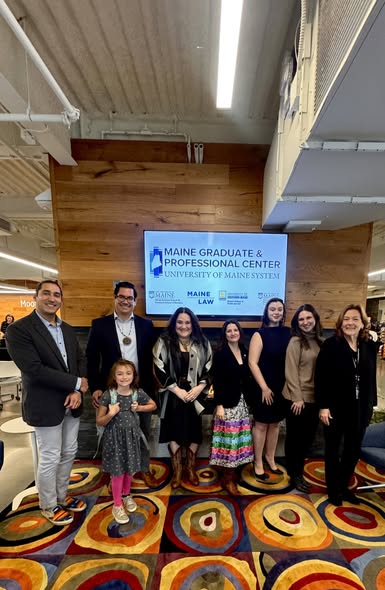
Students from Maine Law recently joined policymakers, diplomats, scientists, Indigenous leaders, and scholars from around the world at the Arctic Circle Assembly, one of the most influential international forums dedicated to the future of the Arctic. The experience offered Maine Law students a rare, immersive look at how law, governance, geopolitics, and Indigenous knowledge intersect in one of the world’s fastest-changing regions.
The Assembly, held over multiple days in Reykjavik, Iceland, convened participants from Arctic and non-Arctic nations to address issues ranging from climate change and food security to international shipping, energy resilience, defense policy, and science diplomacy. For Maine Law students, attendance built directly on the School’s Arctic Law program, led by Professor Charles Norchi, and the school’s Environmental and Oceans Law program.
Students reported that Indigenous voices were prominent throughout the Assembly, offering perspectives often absent from traditional international legal and policy forums.

“One of the most impactful sessions examined economic development challenges faced by Inuit communities in Canada and Greenland,” said 3L Sarah Simon. “I was particularly struck by how communities are forming inter-tribal cooperation agreements without relying on their national governments to broker agreements, as a way to foster collaboration and opportunity.”
Panels emphasized both the promise and difficulty of local solutions in remote Arctic regions, where young people often leave due to limited economic opportunity. Entrepreneurship emerged as a frequently cited path forward—but not without regulatory, infrastructural, and geographic hurdles.
“Resilience means very different things depending on where you are,” Simon noted. “For extremely remote communities, resilience means reliability first—having consistent power or food access—even if environmental sustainability comes later.”
Across plenary sessions and panel discussions, students grappled with the Arctic’s growing geopolitical significance, particularly amid tensions involving Russia, NATO, China, and climate-driven shipping routes.
“The Arctic is often talked about abstractly,” said Joe Horne, another Maine Law attendee. “But sitting in the room with Arctic mayors, diplomats, military leaders, and scientists made clear how immediate the challenges are—from search-and-rescue gaps to the strain cruise ships place on small port cities.”
Several students highlighted discussions on science diplomacy and international cooperation as standouts, including analysis of the Central Arctic Ocean Fisheries Agreement, an example of the precautionary principle in action, and the Biodiversity Beyond National Jurisdiction (BBNJ) agreement, notable for its majority decision-making structure rather than consensus.
“The Assembly showed how rare it is for international law to move proactively rather than reactively,” Horne said. “That was both encouraging and sobering.”
Panels on Arctic governance and legal education underscored the complexity of teaching and practicing law in a region shaped by overlapping jurisdictions, Indigenous sovereignty, environmental urgency, and global power dynamics.
“The scope of the Arctic is much broader than I realized,” said 3L Ian Michelson. “Whether it’s AI-driven research, emergency response planning, or treaty enforcement, the Arctic functions as a microcosm of international law under pressure.”
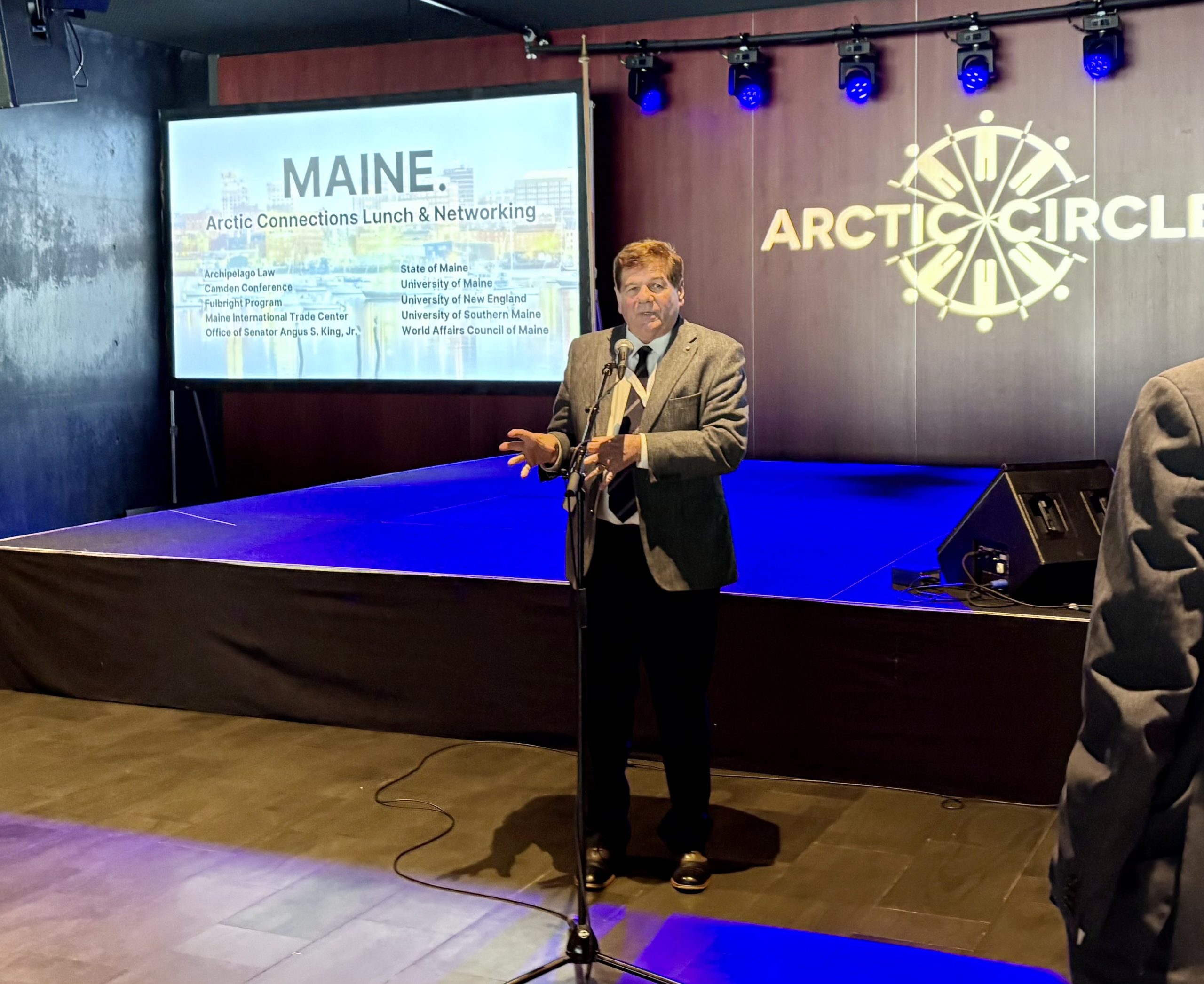
Professor Charles Norchi, who supervised the students and has led Maine Law’s Arctic Law program for nearly ten years, emphasized how unusual it is for U.S. law students to receive this level of exposure to Arctic governance.
“Very few law schools in the United States engage the Arctic as a living legal system rather than an abstract subject,” Norchi said. “Our students are not only studying Arctic law, they are meeting the people who shape it, wrestle with it, and live with its consequences. That kind of experiential, international engagement is essential for preparing lawyers to work in complex, rapidly evolving regions like the Arctic.”
Norchi added that Maine Law’s geographic location, research strengths, and commitment to experiential education uniquely position the School to contribute to Arctic legal discourse. Norchi is in the process of compiling a compendium that explores facets of Arctic law.
“The Arctic is not peripheral—it is central to global conversations about climate, security, Indigenous rights, and international cooperation,” he added. “Giving students direct access to those conversations is both rare and invaluable.”