Maine Law hosted the 2026 Justice for Women Lecture on March 12, featuring Dr. Jane Anyango, a globally recognized leader in nursing education, intimate partner violence prevention, and rural community health.
In her lecture titled “The Power of Community,” Anyango shared lessons from her work in rural Uganda, where she has helped transform healthcare access through initiatives rooted in local knowledge, trust, and collective action. Her message was global but also deeply resonant in Maine, where access to healthcare is a persistent issue in rural communities. Public health challenges, she said, cannot be solved in isolation, but through the collective action of communities.
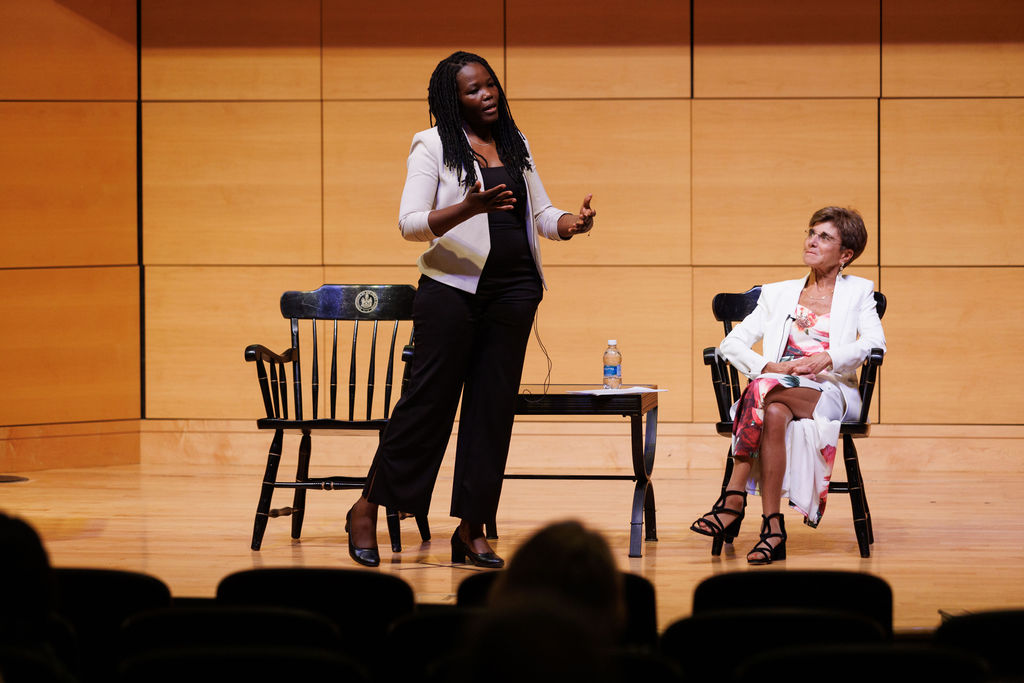
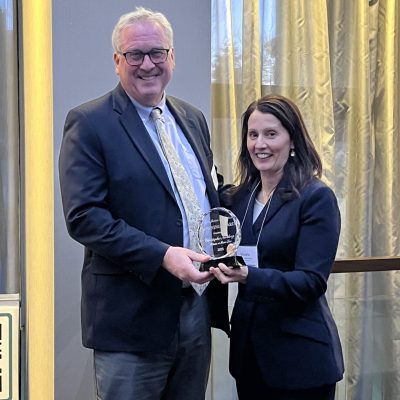
Introducing Anyango, Cathy Lee reflected on the connections between her work in Uganda and the realities faced in Maine. “These challenges are as real there as they are here,” Cathy Lee, founder of the Justice for Women Lecture Series, said. Lee also highlighted the breadth of Anyango’s impact and the importance of bringing her fresh perspective to Maine.
Anyango’s lecture traced the roots of her work to her own childhood. She spoke about growing up in Bwindi, a small rural community in Uganda, where she witnessed the effects of domestic violence and the barriers families faced in accessing care. After her father died when she was 3, she said, her mother was frequently awakened at night by neighbors calling for help. “This was happening almost every night,” Anyango recalled, describing how those early experiences shaped her understanding of the links between violence, health, and community life.
At age 9, she walked five miles to a hospital with her sick sister. That experience, and the way she was treated by medical professionals there, inspired her to pursue a career in nursing. After earning her degree, she chose to return to a similarly rural area in southwestern Uganda, where she became head of nurses and midwives at a 150-bed hospital. As a recent graduate, she was the only registered nurse on staff.
From that starting point, Anyango began to think not only about immediate patient care, but also about the structural barriers that kept communities from accessing healthcare in the first place. In many rural areas, she explained, girls’ education is often cut short by early marriage, limiting both their opportunities and the long-term health of their communities. Because women are often primary caregivers, this has profound ripple effects.
To address these challenges, Anyango developed community-based approaches that recognized local realities and built from existing strengths. She described training girls and women in basic care and connecting them with clinical teams as support workers who could help identify and address pressing health concerns in their communities.
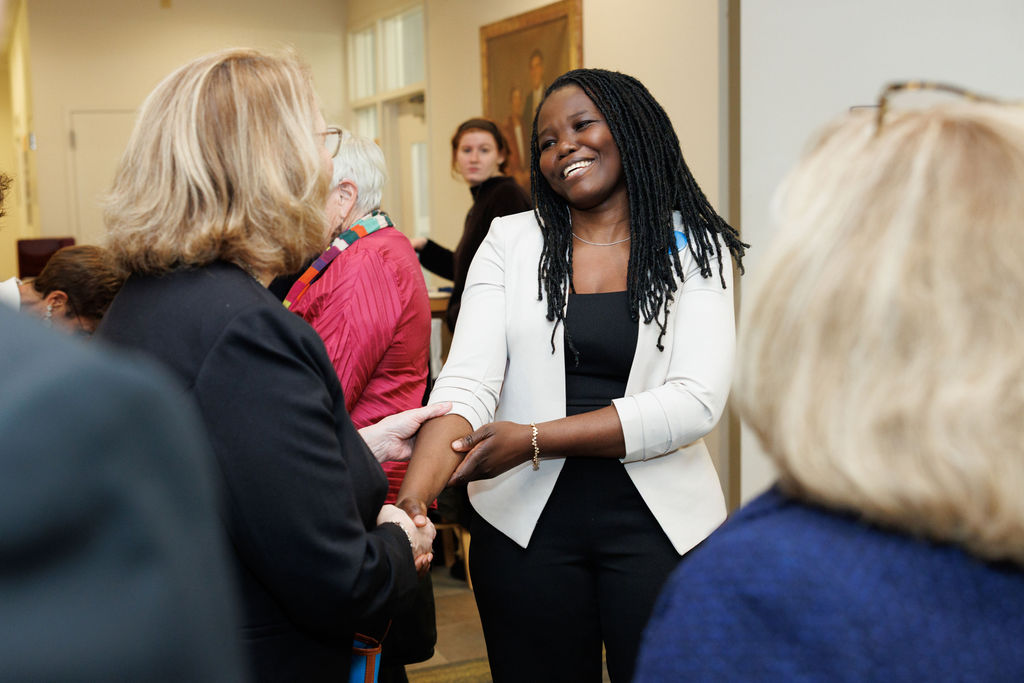
“Communities define who we are,” she said. “A community can be a culture, a faith, what we believe in, a place we live in, and when we get into those communities and interact, they shape the kind of health initiatives put in those particular areas.”
She also emphasized that community-driven solutions are essential to long-term sustainability. “Communities shape the kind of health services available and the sustainability of these services,” she added.
One of the most significant outcomes of that approach was the founding of a nursing school in the region in 2013. Anyango helped establish the school to train nurses within the very communities where they would serve. In its first three years, the school achieved a 100 percent passage rate on Uganda’s national nursing exam. What began as a local response to urgent needs has had a lasting regional impact.
“Initiatives that are community driven can change entire situations,” she said.
Anyango also shared how communities already organized for mutual support can become powerful engines for public health innovation. In one example, she described a local burial insurance system created to help families cover funeral costs at a time when HIV/AIDS deaths were devastating the community. Rather than abandoning that model, community members reimagined it. “We said instead of insurance to bury the dead, let’s find a way to make it contribute towards healthcare so those who can’t access healthcare can more easily access it,” she said. The pooled funds were then used to help community members pay for medical care.
Her lecture underscored the severe shortages facing rural healthcare systems. In Uganda, she noted, the nurse-to-patient ratio is approximately 1 to 11,000, far below the World Health Organization’s recommended ratio of 1 to 500. Even so, community-led approaches have helped produce remarkable outcomes, including improvements that have made the regional hospital where she worked one of the highest-ranked in the country.
Anyango also addressed intimate partner violence as a major public health issue. In communities where bride price traditions can reinforce the idea that women are property, she said, responses must go beyond individual intervention and instead mobilize community-wide change.
“The only way to overcome this is to come together as a community and address it together,” Anyango said.
Her remarks offered a powerful reminder that health, justice, and gender equity are deeply intertwined, and that durable solutions must begin with listening to the people most affected.